

In today’s competitive digital marketplace, businesses must do more than just sell products or services. They need to build long-term relationships with customers, understand customer behavior, personalize communication, and deliver exceptional experiences across every touchpoint. This is where Customer Relationship Management (CRM) becomes essential.
Customer Relationship Management is no longer just a sales tool. Modern CRM platforms help businesses streamline marketing, automate workflows, improve customer support, and increase overall business efficiency. Companies of all sizes – from startups to global enterprises – are adopting CRM solutions to strengthen customer loyalty and drive sustainable growth.
Table of Contents
ToggleWhat Is Customer Relationship Management (CRM)?
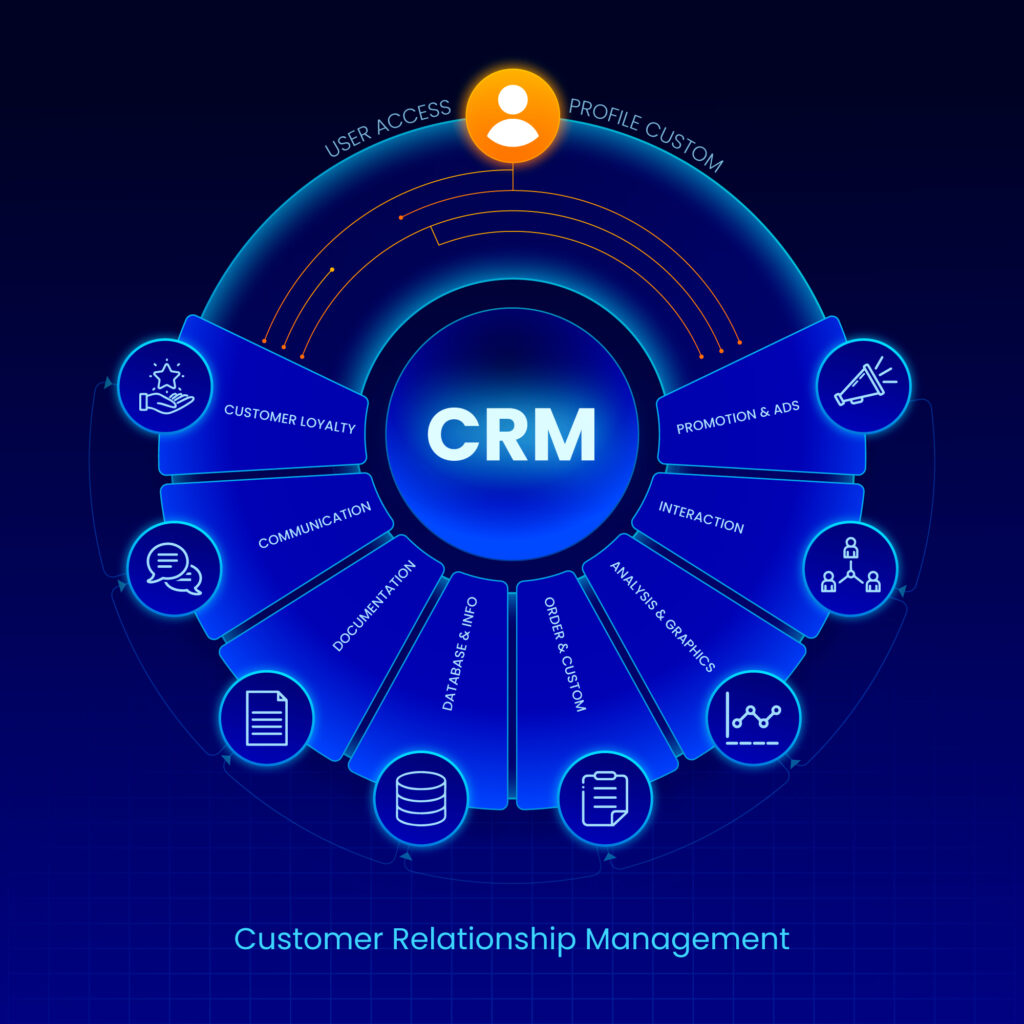
Customer Relationship Management (CRM) refers to the technologies, strategies, and systems businesses use to manage interactions with existing and potential customers. A CRM platform centralizes customer data, tracks communication history, automates sales activities, and helps organizations make data-driven decisions.
Instead of relying on spreadsheets or disconnected systems, CRM software creates a unified environment where sales, marketing, and support teams can collaborate effectively. Modern CRM systems also integrate artificial intelligence (AI), automation, and analytics to deliver smarter customer experiences.
Why CRM Matters for Modern Businesses
Businesses that successfully implement CRM systems gain a competitive advantage through better customer engagement and improved operational efficiency. CRM software enables organizations to:
- Improve customer retention
- Enhance lead management
- Automate repetitive tasks
- Increase sales productivity
- Personalize marketing campaigns
- Strengthen customer support
- Generate accurate sales forecasts
- Improve team collaboration
A well-implemented CRM strategy allows businesses to understand customer needs in real time and respond faster with personalized solutions. Companies can track every stage of the customer journey, from the first interaction to long-term loyalty programs.
Key Features of CRM Software
1. Contact Management
CRM systems store and organize customer information such as names, email addresses, phone numbers, purchase history, and communication records in a centralized database.
2. Sales Automation
Sales automation tools help businesses manage pipelines, schedule follow-ups, assign leads, and automate repetitive sales tasks, improving efficiency and closing rates.
3. Marketing Automation
CRM platforms allow businesses to automate email campaigns, audience segmentation, customer targeting, and lead nurturing activities for better engagement.
4. Customer Support Management
Modern CRM solutions provide ticketing systems, live chat integration, and customer service analytics to improve support experiences and issue resolution.
5. Analytics and Reporting
Advanced reporting dashboards provide insights into customer behavior, campaign performance, revenue trends, and sales forecasting.
6. AI-Powered Insights
AI-enabled CRM systems can analyze customer data, predict buying behavior, recommend actions, and automate customer interactions using chatbots and virtual assistants.
Types of CRM Systems
Businesses choose CRM solutions based on their operational requirements and customer engagement goals.
Operational CRM
Operational CRM focuses on automating sales, marketing, and customer service processes. It helps businesses improve daily workflows and customer interactions.
Analytical CRM
Analytical CRM collects and analyzes customer data to uncover trends, customer preferences, and business opportunities. It helps organizations make data-driven decisions.
Collaborative CRM
Collaborative CRM improves communication across departments by sharing customer information between sales, marketing, and support teams to deliver a seamless customer experience.
Benefits of CRM Implementation
Better Customer Relationships
CRM software helps businesses understand customer preferences and personalize interactions, leading to improved customer satisfaction and loyalty.
Increased Sales Revenue
By automating sales processes and improving lead tracking, CRM systems help businesses convert more leads into paying customers.
Improved Team Productivity
Automation reduces manual work, allowing employees to focus on high-value tasks such as customer engagement and strategic planning.
Enhanced Customer Retention
Businesses using CRM systems can proactively engage customers, resolve issues quickly, and create stronger long-term relationships.
Data-Driven Decision Making
CRM analytics provide valuable insights that help companies improve marketing strategies, customer experiences, and business performance.
AI and the Future of CRM
Artificial Intelligence is transforming CRM technology by making customer engagement more intelligent and automated. AI-powered CRM solutions can:
- Predict customer behavior
- Automate customer support
- Analyze customer sentiment
- Recommend next-best actions
- Personalize user experiences
- Improve lead scoring accuracy
AI chatbots and virtual assistants are becoming increasingly popular in CRM platforms, enabling businesses to provide 24/7 customer support while reducing operational costs. Predictive analytics also help companies identify opportunities before competitors do.
How to Choose the Right CRM Software
Selecting the right CRM depends on business size, goals, and industry requirements. When evaluating CRM software, businesses should consider:
- Ease of use
- Integration capabilities
- Customization options
- Automation features
- AI capabilities
- Scalability
- Mobile accessibility
- Security and compliance
- Pricing and support
Small businesses may prefer simple cloud-based CRM systems, while larger enterprises often require advanced CRM platforms with AI and multi-department integrations.
CRM Challenges Businesses Should Know
While CRM offers significant advantages, businesses may face challenges during implementation, including:
- User adoption issues
- Data migration complexities
- Integration difficulties
- High customization costs
- Employee training requirements
Successful CRM adoption requires proper planning, employee training, and a clear customer engagement strategy.
CRM Trends Shaping the Future
The future of CRM technology is driven by innovation and customer-centric strategies. Key CRM trends include:
- AI-driven automation
- Voice-enabled CRM
- Hyper-personalization
- Mobile-first CRM platforms
- Omnichannel customer engagement
- Predictive analytics
- Social CRM integration
- Cloud-native CRM systems
Businesses that embrace these trends can deliver more personalized, faster, and more efficient customer experiences.
Final Thoughts
Customer Relationship Management has evolved into a powerful business growth engine that goes beyond sales tracking. Modern CRM systems combine automation, analytics, AI, and customer engagement tools to help businesses build meaningful customer relationships and improve operational efficiency.
Whether you are a startup looking to organize leads or a large enterprise aiming to improve customer experiences, investing in the right CRM strategy can drive long-term success, improve customer loyalty, and increase revenue.
As customer expectations continue to rise, businesses that leverage intelligent CRM solutions will be better positioned to compete, innovate, and grow in the digital economy.