In today’s competitive digital landscape, choosing the right mobile app development partner is a critical decision that directly impacts your business growth, customer experience, and long-term success. A well-built mobile application is no longer just a digital asset-it’s a powerful tool that drives engagement, streamlines operations, and creates new revenue opportunities.
However, with countless development companies in the market, selecting the ideal partner can be challenging. Businesses need a team that not only understands technology but also aligns with their vision, goals, and scalability requirements. This is where partnering with an experienced company like Autotech360 makes a difference, offering a strategic approach to building high-performance mobile applications tailored for long-term value.
In this blog, we’ll guide you through the essential factors to consider when choosing the right mobile app development partner, helping you make an informed decision that ensures sustainable growth and success.
Table of Contents
ToggleUnderstand Your Business Goals
Before selecting a mobile app development partner, it’s essential to clearly define your business goals and expectations. Without a well-defined vision, even the most technically skilled development team may struggle to deliver results that align with your long-term objectives.
Start by identifying the core purpose of your mobile application. Are you aiming to improve customer engagement, streamline internal operations, or generate new revenue streams? Understanding your target audience, industry needs, and user pain points will help shape the app’s functionality and overall strategy.
A reliable development partner like Autotech360 takes the time to understand your business model, goals, and growth plans before starting the development process. This ensures that every feature, design element, and technology choice supports your long-term success rather than just short-term delivery.
Additionally, setting clear KPIs-such as user acquisition, retention rates, and ROI-helps both you and your development partner stay aligned throughout the project. When your business goals are clearly defined from the beginning, it becomes much easier to build a scalable, future-ready mobile application that delivers real value.
Evaluate Technical Expertise When Choosing a Mobile App Development Partner
Choosing the right partner starts with one critical factor-technical expertise. A strong foundation in technology ensures your application is scalable, secure, and future-ready. When evaluating a team for your mobile app development services, it’s essential to go beyond surface-level claims and assess their real capabilities.
1. Proficiency in Multiple Platforms
A reliable development partner should have proven experience in building applications for both iOS and Android platforms. Whether they specialize in native development or cross-platform frameworks like Flutter or React Native, their ability to deliver consistent performance across devices is crucial. This ensures your app reaches a broader audience without compromising user experience.
2. Expertise in Modern Technologies
Today’s mobile apps are more than just basic interfaces. Businesses demand intelligent, connected, and automated solutions. Look for a team skilled in advanced technologies such as Artificial Intelligence (AI), Internet of Things (IoT), and Blockchain. These capabilities allow your business to stay competitive and offer innovative features that enhance user engagement.
3. Strong Backend Development Skills
An app’s performance depends heavily on its backend. Evaluate whether the development team can build robust APIs, manage databases efficiently, and ensure seamless server-side performance. Technologies like Node.js, Python, and cloud platforms such as AWS or Azure play a key role in delivering high-performing applications.
4. Focus on Scalability
Your app should grow as your business expands. A technically sound partner designs applications with scalability in mind, allowing you to handle increased traffic, users, and features without major disruptions. This includes choosing the right architecture and cloud infrastructure.
5. Security Implementation
With rising cyber threats, security cannot be ignored. Ensure the development team follows best practices like data encryption, secure authentication, and compliance with global standards. A secure app builds trust and protects your business from potential risks.
6. Testing and Quality Assurance
Technical expertise also includes a strong quality assurance process. The right partner conducts rigorous testing-functional, performance, and security testing-to ensure your app is bug-free and performs smoothly under all conditions.
7. Continuous Learning and Adaptability
Technology evolves rapidly. A competent mobile app development company stays updated with the latest trends, tools, and frameworks. Their willingness to adapt ensures your app remains relevant and competitive in the long run.
Review Portfolio and Case Studies of a Mobile App Development Partner
Choosing the right mobile app development partner requires more than just reviewing proposals-it demands a deep dive into their past work. A well-structured portfolio and detailed case studies reveal how effectively a company transforms ideas into successful digital products.
1. Evaluate Real Project Experience
A strong portfolio reflects the actual capabilities of a mobile app development partner. Instead of focusing only on design, analyze how each project solves real business problems. Look for apps that demonstrate innovation, usability, and clear business impact.
2. Analyze Detailed Case Studies
Case studies provide a behind-the-scenes look at how a development team approaches challenges. The best mobile app development partner will clearly outline:
- Client objectives and requirements
- Challenges faced during development
- Technologies and frameworks used
- Final results and performance improvements
This transparency helps you understand their problem-solving skills and execution strategy.
3. Check Industry Expertise
An experienced mobile app development partner will have worked across multiple industries such as healthcare, fintech, eCommerce, and enterprise solutions. This diversity shows adaptability, while experience in your specific domain ensures they understand your market and user expectations.
4. Assess Project Complexity
Not all apps are simple. Reviewing complex projects helps you evaluate whether the mobile app development partner can handle:
- Advanced integrations (APIs, payment gateways, third-party tools)
- Real-time functionalities
- Scalable enterprise applications
A portfolio with high-level projects indicates strong technical expertise and reliability.
5. Look for Measurable Results
A results-driven mobile app development partner will showcase data such as:
- Increased user engagement
- Higher download rates
- Improved customer retention
- Revenue growth
These metrics prove their ability to deliver not just apps, but real business value.
6. Verify Authenticity and Transparency
Be cautious of generic portfolios with limited details. A trustworthy mobile app development partner will clearly explain their role, development process, and the outcomes achieved. Authentic case studies build confidence and reduce risk.
7. Review End-to-End Capabilities
A complete portfolio should demonstrate the full development lifecycle, including:
- UI/UX design
- App development
- Testing and quality assurance
- Deployment and post-launch support
This ensures your mobile app development partner can handle your project from start to finish.
Assess Industry Experience of a Mobile App Development Partner
When choosing the right mobile app development partner, industry experience plays a critical role in determining the success of your project. A partner with deep domain knowledge can better understand your business challenges, user expectations, and market dynamics, leading to faster development and more effective solutions.
1. Importance of Domain Knowledge
An experienced mobile app development partner brings valuable insights specific to your industry. Whether it’s healthcare, fintech, eCommerce, or logistics, each sector has unique workflows, compliance requirements, and user behaviors. A partner familiar with your domain can reduce the learning curve and deliver more relevant solutions.
2. Understanding of Industry Regulations
Different industries require strict adherence to regulations and standards. For example:
- Healthcare apps must follow data privacy and security guidelines
- Fintech apps require secure payment integrations and compliance
- eCommerce platforms demand reliable transaction handling
A knowledgeable mobile app development partner ensures your app meets these standards, minimizing legal and operational risks.
3. Ability to Solve Industry-Specific Challenges
Every industry has its own challenges, such as real-time tracking in logistics, secure transactions in fintech, or patient data management in healthcare. A skilled mobile app development partner can anticipate these challenges and implement proven solutions, saving time and development costs.
4. Faster Development and Deployment
With prior industry experience, a mobile app development partner can accelerate the development process. They already understand common features, integrations, and user expectations, which helps in faster planning, development, and deployment.
5. Better User Experience Design
User expectations vary across industries. For example, an eCommerce app requires seamless navigation and quick checkout, while an enterprise app focuses on functionality and efficiency. An experienced mobile app development partner designs user experiences that align perfectly with your target audience.
6. Proven Success in Similar Projects
Look for partners who have successfully delivered apps in your industry. Their past work demonstrates their ability to handle similar requirements and deliver measurable results. This reduces uncertainty and builds confidence in their capabilities.
7. Strategic Insights and Innovation
A well-experienced mobile app development partner doesn’t just execute your idea—they enhance it. Their industry exposure allows them to suggest innovative features, emerging trends, and best practices that can give your app a competitive edge.
Check Client Reviews and Testimonials of a Mobile App Development Partner
When selecting the right mobile app development partner, client reviews and testimonials offer valuable insights into their credibility, performance, and reliability. They provide real feedback from businesses that have already worked with the company, helping you make a more informed decision.
1. Understand the Importance of Client Reviews
Client reviews play a major role in B2B decision-making. Research shows that 94% of buyers rely on online reviews when choosing a service provider . This makes reviews one of the most powerful indicators of trust and reputation for any mobile app development partner.
2. Check Multiple Review Platforms
Don’t rely on a single source. Evaluate reviews across trusted platforms such as:
- Clutch
- Google Reviews
- GoodFirms
- Trustpilot
A strong mobile app development partner will have consistent ratings across multiple platforms, indicating reliability and transparency.
3. Focus on Review Quality, Not Just Ratings
High ratings alone are not enough. Look for detailed reviews that explain:
- Project scope and requirements
- Communication and collaboration
- Timelines and delivery
- Problem-solving approach
Verified and detailed reviews provide deeper insights into how the mobile app development partner actually works.
4. Look for Consistency and Recency
Consistency in positive feedback over time is a strong indicator of reliability. Recent reviews are especially important, as they reflect the company’s current performance and capabilities. Platforms often prioritize recent feedback because it gives the most accurate picture .
5. Analyze Client Satisfaction and Outcomes
Pay attention to what clients say about results, such as:
- Improved business performance
- Enhanced user experience
- On-time delivery
- ROI and business growth
A results-driven mobile app development partner will have testimonials that highlight measurable success, not just generic praise.
6. Identify Red Flags in Reviews
Be cautious if you notice:
- Repeated complaints about delays or poor communication
- Lack of detailed feedback
- Too many overly generic or similar reviews
Also, remember that some platforms may show a curated set of reviews, so always cross-check feedback from multiple sources.
7. Value Verified and Authentic Feedback
Verified reviews-where platforms confirm the client relationship-carry more credibility. Authentic testimonials help you understand the real strengths and weaknesses of a mobile app development partner.
Communication and Collaboration with a Mobile App Development Partner
Effective communication and collaboration are key factors in building a successful relationship with your mobile app development partner. Even the most technically skilled team can fall short if they lack transparency, responsiveness, and a collaborative mindset. Strong communication ensures your project stays aligned with business goals and delivers expected results.
1. Importance of Clear Communication
A reliable mobile app development partner maintains open and transparent communication throughout the project. This includes clearly understanding your requirements, providing regular updates, and addressing concerns promptly. Clear communication minimizes misunderstandings and ensures smooth project execution.
2. Agile and Collaborative Approach
Modern app development thrives on agile methodologies. A professional mobile app development partner follows an iterative process where you are involved at every stage—planning, development, testing, and deployment. This collaborative approach allows for quick adjustments and continuous improvement.
3. Regular Updates and Reporting
Consistent progress updates are essential for tracking development. The right mobile app development partner will:
- Share weekly or bi-weekly reports
- Provide milestone updates
- Conduct regular meetings or demos
This keeps you informed and ensures the project is moving in the right direction.
4. Use of Collaboration Tools
Efficient communication is supported by the right tools. A well-organized mobile app development partner uses platforms like:
- Project management tools (Jira, Trello, Asana)
- Communication tools (Slack, Microsoft Teams)
- Version control systems (Git)
These tools enhance transparency, streamline workflows, and improve team coordination.
5. Responsiveness and Availability
Timely responses are crucial in any project. A dependable mobile app development partner ensures quick turnaround times for queries, feedback, and issue resolution. This responsiveness helps avoid delays and keeps the project on schedule.
6. Cultural and Time Zone Alignment
For global collaborations, time zone differences and cultural alignment matter. A good mobile app development partner adapts to your working hours and communication style, ensuring smooth coordination and minimal disruptions.
7. Feedback and Iteration Process
Continuous feedback is essential for building a successful app. A collaborative mobile app development partner welcomes your input, incorporates feedback efficiently, and makes necessary improvements throughout the development cycle.
Development Process and Methodology of a Mobile App Development Partner
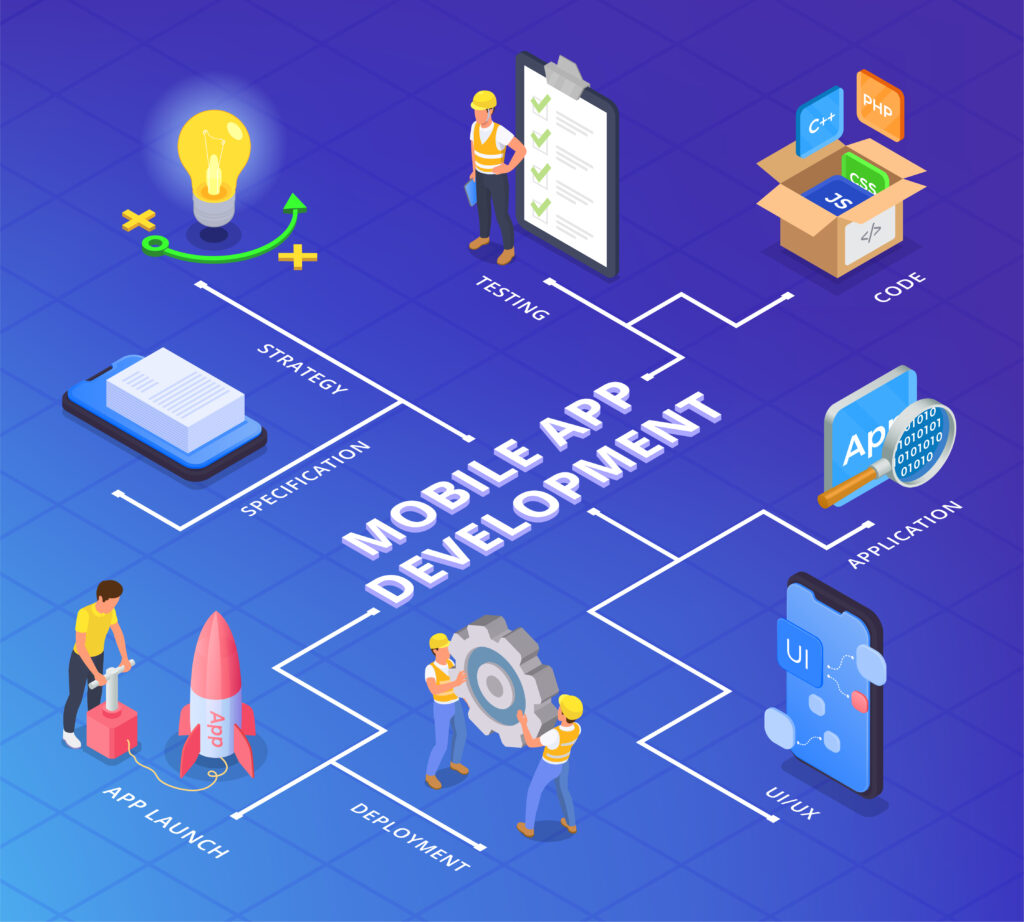
A well-defined development process is a strong indicator of a reliable mobile app development partner. The methodology they follow directly impacts the quality, speed, and success of your application. Choosing a partner with a structured and transparent approach ensures your project is delivered efficiently and meets your business goals.
1. Importance of a Structured Development Process
A professional mobile app development partner follows a clear roadmap from ideation to deployment. This structured approach helps in better planning, risk management, and execution. It ensures every stage of development is aligned with your objectives and timelines.
2. Agile vs. Traditional Methodologies
Most modern projects rely on Agile methodology due to its flexibility and iterative nature. A skilled mobile app development partner typically uses:
- Agile Methodology – Focuses on continuous development, frequent updates, and client feedback
- Waterfall Model – A linear approach suitable for projects with fixed requirements
Agile is generally preferred as it allows faster adjustments and improved collaboration throughout the development lifecycle.
3. Requirement Analysis and Planning
The foundation of any successful project starts with understanding the requirements. A reliable mobile app development partner conducts detailed discussions to define:
- Business objectives
- Target audience
- Core features and functionalities
This stage ensures clarity before moving into design and development.
4. UI/UX Design Phase
User experience is a key factor that determines whether an app succeeds or fails in today’s competitive market. A skilled mobile app development partner focuses on designing intuitive and engaging experiences right from the start. By creating detailed wireframes, interactive prototypes, and well-defined user journeys, they bring the app concept to life before actual development begins. This early visualization not only ensures clarity in design but also helps identify usability gaps, optimize workflows, and implement improvements at the right stage-saving both time and development costs while delivering a seamless user experience.
5. Development and Iteration
During the development phase, the app is built in stages. A competent mobile app development partner:
- Breaks the project into smaller sprints
- Delivers incremental updates
- Continuously integrates feedback
This iterative approach ensures better quality and faster delivery.
6. Testing and Quality Assurance
Quality assurance is a vital component of the mobile app development process. A reliable mobile app development partner conducts:
- Functional testing
- Performance testing
- Security testing
This ensures the app is bug-free, secure, and performs well under different conditions.
7. Deployment and Launch
Once testing is complete, the app is deployed to app stores or enterprise environments. A professional mobile app development partner ensures a smooth launch with proper configurations, compliance, and documentation.
8. Post-Launch Monitoring and Optimization
The process doesn’t end after launch. A reliable mobile app development partner monitors performance, collects user feedback, and releases updates to improve functionality and user experience over time.
Focus on UI/UX Design Capabilities of a Mobile App Development Partner
When choosing the right mobile app development partner, UI/UX design capabilities play a crucial role in determining your app’s success. A visually appealing design is important, but what truly matters is how users interact with your app. A strong focus on user experience ensures higher engagement, retention, and overall satisfaction.
1. Importance of User-Centric Design
A skilled mobile app development partner prioritizes user needs at every stage of design. This involves understanding user behavior, preferences, and pain points to create intuitive and seamless experiences. A user-centric design reduces friction and makes navigation effortless.
2. Wireframing and Prototyping Expertise
Before development begins, a professional mobile app development partner creates wireframes and interactive prototypes. These help visualize the app structure, user flow, and functionality, allowing you to validate ideas and make improvements early in the process.
3. Consistency Across Devices and Platforms
Your app should deliver a consistent experience across different devices and operating systems. A reliable mobile app development partner ensures uniform design elements, responsive layouts, and smooth performance across iOS, Android, and other platforms.
4. Focus on Usability and Accessibility
Great design goes beyond visual appeal-it focuses on functionality and ease of use. A professional mobile app development partner ensures:
- Easy navigation and clear interfaces
- Fast loading times
- Accessibility for diverse user groups
This improves user satisfaction and expands your app’s reach.
5. Modern Design Trends and Best Practices
An experienced mobile app development partner stays updated with the latest UI/UX trends such as minimalistic design, micro-interactions, dark mode, and personalized experiences. Applying these trends enhances the overall appeal and competitiveness of your app.
6. Data-Driven Design Approach
Top design teams rely on data and user feedback to refine the experience. A results-driven mobile app development partner uses analytics, A/B testing, and user behavior insights to continuously improve the design and performance of your app.
7. Impact on Business Outcomes
Effective UI/UX design directly influences business success. A well-designed app leads to:
- Higher user engagement
- Increased retention rates
- Better conversion rates
- Strong brand perception
A capable mobile app development partner understands this connection and designs with both users and business goals in mind.
Scalability and Future-Readiness of a Mobile App Development Partner
When selecting the right mobile app development partner, scalability and future-readiness are critical factors that determine your app’s long-term success. Your application should not only meet current business needs but also adapt to future growth, technological advancements, and evolving user expectations.
1. Building for Scalability from Day One
A reliable mobile app development partner designs applications with scalability in mind. This means creating an architecture that can handle increasing users, data, and features without compromising performance. Scalable apps reduce the need for costly redesigns as your business grows.
2. Flexible Architecture and Technology Stack
The right mobile app development partner chooses modern and flexible technologies that support expansion. Using microservices architecture, cloud-based infrastructure, and modular development ensures your app can evolve without major disruptions.
3. Cloud Integration and Performance Optimization
Cloud platforms like AWS, Azure, and Google Cloud play a vital role in scalability.A skilled mobile app development partner utilizes cloud technologies to:
- Handle high traffic loads
- Ensure fast performance
- Enable seamless data storage and access
This ensures your app performs consistently even during peak usage.
4. Easy Integration with Third-Party Services
As your business grows, you may need to integrate new tools such as payment gateways, CRM systems, or analytics platforms. A future-ready mobile app development partner builds apps that support easy integration with third-party services and APIs.
5. Continuous Updates and Feature Expansion
Technology evolves rapidly, and your app must keep up. A forward-thinking mobile app development partner ensures your app can accommodate new features, updates, and innovations without affecting existing functionality.
6. Performance Monitoring and Optimization
Scalability is not just about growth-it’s about maintaining performance. A dependable mobile app development partner implements monitoring tools to track app performance, identify bottlenecks, and optimize the system for better efficiency.
7. Adaptability to Emerging Technologies
Future-ready applications are built to adopt new technologies such as AI, IoT, and automation. A knowledgeable mobile app development partner ensures your app can integrate these innovations, keeping your business competitive in the long run.
Security and Compliance Standards of a Mobile App Development Partner
When choosing a mobile app development partner, security and compliance should never be overlooked. With increasing cyber threats and strict data regulations, your app must be built with robust security measures and adhere to industry standards. A secure application not only protects user data but also builds trust and credibility for your business.
1. Importance of Data Security
A reliable mobile app development partner prioritizes data protection at every stage of development. This includes safeguarding sensitive user information such as personal data, payment details, and login credentials. Strong security practices help prevent breaches, data leaks, and unauthorized access.
2. Secure Coding Practices
A professional mobile app development partner follows secure coding standards to minimize vulnerabilities. This includes:
- Input validation to prevent attacks
- Secure API development
- Protection against common security threats such as SQL injection and cross-site scripting (XSS)
These practices ensure your application remains resilient against cyberattacks.
3. Data Encryption and Authentication
Encryption is a key component of app security. A trusted mobile app development partner implements:
- End-to-end data encryption
- Secure authentication methods (OAuth, multi-factor authentication)
- Safe data storage practices
This ensures that sensitive data remains secure both during transmission and while stored.
4. Compliance with Global Regulations
Different regions and industries have specific compliance requirements. A knowledgeable mobile app development partner ensures adherence to standards such as:
- GDPR (General Data Protection Regulation)
- HIPAA (for healthcare applications)
- PCI-DSS (for payment processing)
Compliance reduces legal risks and ensures your app operates within regulatory frameworks.
5. Regular Security Testing and Audits
Security is an ongoing process. A dependable mobile app development partner conducts:
- Vulnerability assessments
- Penetration testing
- Security audits
These measures help identify and fix potential weaknesses before they can be exploited.
6. Secure Backend and Infrastructure
Beyond the app itself, backend systems must also be secure. A competent mobile app development partner ensures:
- Secure cloud infrastructure
- Role-based access control
- Regular system updates and patches
This strengthens the overall security of your application ecosystem.
7. User Privacy and Data Protection
Respecting user privacy is essential for long-term success. A responsible mobile app development partner implements clear privacy policies, data handling practices, and user consent mechanisms, ensuring transparency and trust.
Post-Launch Support and Maintenance from a Mobile App Development Partner
Choosing a mobile app development partner doesn’t end with the app launch. In fact, post-launch support and maintenance are critical to ensuring your application continues to perform, evolve, and deliver value over time. A reliable partner provides ongoing support to keep your app secure, updated, and aligned with changing business needs.
1. Importance of Continuous Support
After deployment, apps require constant monitoring and updates. A dependable mobile app development partner ensures your app runs smoothly by addressing bugs, fixing performance issues, and maintaining system stability. Continuous support helps prevent downtime and enhances user satisfaction.
2. Regular Updates and Feature Enhancements
User expectations and market trends evolve quickly. A proactive mobile app development partner delivers consistent updates and progress reports, including:
- Feature enhancements
- UI/UX improvements
- Compatibility with new OS versions
This ensures your app remains competitive and relevant in the long run.
3. Bug Fixes and Performance Optimization
Even well-developed apps can encounter issues post-launch. A trusted mobile app development partner actively monitors performance and resolves:
- Bugs and crashes
- Slow loading times
- Functional inconsistencies
This helps maintain a seamless user experience.
4. Security Updates and Monitoring
Security threats continue to evolve, making ongoing protection essential. A responsible mobile app development partner regularly implements:
- Security patches
- Vulnerability fixes
- Continuous monitoring for potential risks
This ensures your app and user data remain protected at all times.
5. Scalability and System Upgrades
As your user base grows, your app needs to scale efficiently. A forward-thinking mobile app development partner supports:
- Infrastructure upgrades
- Server scaling
- Integration of new technologies
This allows your app to handle increased demand without compromising performance.
6. Analytics and Performance Tracking
Post-launch success depends on data-driven decisions. A capable mobile app development partner uses analytics tools to track:
- User behavior
- Engagement rates
- App performance metrics
These insights help optimize features and improve user experience over time.
7. Dedicated Support and SLA Agreements
A professional mobile app development partner offers structured support through Service Level Agreements (SLAs). This ensures:
- Defined response times
- Ongoing technical assistance
- Reliable issue resolution
Having a dedicated support team provides peace of mind and long-term reliability.
Pricing and Engagement Models of a Mobile App Development Partner
Understanding pricing and engagement models is essential when selecting the right mobile app development partner. The cost structure not only affects your budget but also influences project flexibility, scalability, and long-term collaboration. Choosing the right model ensures transparency, efficiency, and better return on investment.
1. Importance of Transparent Pricing
A reliable mobile app development partner provides clear and detailed pricing without hidden costs. Transparency helps you plan your budget effectively and avoids unexpected expenses during the development process.
2. Fixed Price Model
In this model, the project scope, timeline, and cost are defined upfront. It is ideal when requirements are clear and unlikely to change.
Best for: Small to mid-sized projects with well-defined goals
Benefits: Predictable budget, low financial risk
Limitations: Less flexibility for changes
A professional mobile app development partner will carefully analyze requirements before committing to a fixed price.
3. Hourly (Time & Material) Model
Here, you pay based on the actual time and resources used. This model is suitable for projects with evolving requirements.
Best for: Dynamic projects and ongoing development
Benefits: High flexibility, easy to scale
Limitations: Budget may vary
An experienced mobile app development partner ensures proper tracking and reporting to maintain cost control.
4. Dedicated Team Model
This model offers a dedicated team of developers focused entirely on your project.It’s ideal for long-term collaboration and large-scale applications.
Best for: Enterprises and continuous development needs
Benefits: Full control, scalability, consistent workflow
Limitations: Higher initial investment
A trusted mobile app development partner will align the dedicated team with your business objectives.
5. Hybrid Engagement Model
Some projects require a combination of different models. A flexible mobile app development partner may offer hybrid solutions-such as fixed pricing for initial phases and hourly billing for ongoing updates.
6. Balancing Cost vs. Quality
Choosing the cheapest option can lead to poor results. A reliable mobile app development partner focuses on delivering value rather than just low cost. Consider:
- Technical expertise
- Quality of work
- Long-term support
Investing in quality development ensures better performance and reduces future expenses.
7. Scalability of Engagement
As your project grows, your requirements may change. A flexible mobile app development partner allows you to scale resources, add new features, and adjust the engagement model as needed.
Cultural Fit and Company Values of a Mobile App Development Partner
When selecting a mobile app development partner, technical expertise and pricing are important-but cultural fit and company values are equally critical for long-term success. A partner who aligns with your business culture ensures smoother collaboration, better communication, and a stronger working relationship.
1. Importance of Cultural Alignment
A compatible mobile app development partner understands your work style, communication preferences, and business ethics. This alignment reduces friction, improves teamwork, and helps both sides work toward shared goals more effectively.
2. Shared Vision and Goals
A reliable mobile app development partner doesn’t just execute tasks-they believe in your vision. When both teams share the same goals and long-term objectives, it leads to better decision-making and a more strategic approach to development.
3. Communication Style and Work Ethics
Every company has its own communication style and work culture. The right mobile app development partner adapts to your preferred way of working-whether it’s formal reporting, agile collaboration, or frequent check-ins. Strong work ethics such as accountability, transparency, and commitment are also essential.
4. Time Zone Compatibility
For global collaborations, time zone differences can impact productivity. A flexible mobile app development partner ensures overlapping working hours or provides support that accommodates your schedule, enabling smooth communication and faster issue resolution.
5. Team Collaboration and Attitude
Beyond skills, attitude matters. A collaborative mobile app development partner is proactive, open to feedback, and willing to go the extra mile. Positive team dynamics lead to better problem-solving and innovation throughout the project.
6. Commitment to Quality and Innovation
Company values often reflect the quality of work delivered. A value-driven mobile app development partner prioritizes:
- High-quality development standards
- Continuous improvement
- Innovation and creativity
This ensures your app remains competitive and aligned with market trends.
7. Long-Term Partnership Mindset
A strong cultural fit encourages long-term collaboration. The best mobile app development partner focuses not just on completing a project but on building an ongoing relationship that supports your business growth over time.
Red Flags to Avoid When Choosing a Mobile App Development Partner
Selecting the right mobile app development partner is crucial for your project’s success. While many companies promise high-quality solutions, not all deliver as expected. Identifying red flags early can help you avoid costly mistakes, delays, and poor outcomes.
1. Unrealistically Low Pricing
If a mobile app development partner offers pricing significantly lower than others, it’s often a warning sign. Low costs may indicate:
- Compromised quality
- Inexperienced developers
- Hidden charges later in the project
Always balance cost with expertise and value.
2. Lack of Clear Communication
Poor communication is one of the biggest red flags. If a mobile app development partner is slow to respond, unclear in explanations, or avoids direct answers, it can lead to misunderstandings and project delays.
3. No Proven Portfolio or Case Studies
A credible mobile app development partner should have a strong portfolio and detailed case studies. If they cannot showcase past work or provide references, it raises concerns about their experience and reliability.
4. Overpromising and Unrealistic Timelines
Be cautious of partners who promise quick delivery without fully understanding your requirements. An unreliable mobile app development partner may:
- Underestimate project complexity
- Skip essential development steps
- Deliver low-quality results
Realistic timelines are a sign of professionalism.
5. Limited Technical Expertise
If the mobile app development partner lacks knowledge of modern technologies or cannot explain their development approach, it may result in outdated or inefficient solutions.
6. No Structured Development Process
A missing or unclear development process is a major concern. A professional mobile app development partner should follow a structured methodology, including planning, development, testing, and deployment.
7. Weak Security Practices
Security should never be compromised. If a mobile app development partner does not prioritize data protection, secure coding, or compliance standards, your app and user data could be at risk.
8. No Post-Launch Support
Some companies disappear after delivering the app. A trustworthy mobile app development partner offers ongoing support, maintenance, and updates to ensure long-term success.
9. Negative or Inconsistent Client Reviews
Consistent negative feedback or unresolved complaints are strong warning signs. A reliable mobile app development partner will have positive, detailed, and recent client reviews.
10. Lack of Transparency
If the partner is not transparent about pricing, timelines, or processes, it can lead to trust issues. A dependable mobile app development partner maintains honesty and clarity at every stage.
Final Checklist Before Hiring a Mobile App Development Partner
Before making your final decision, it’s important to evaluate every critical factor to ensure you choose the right mobile app development partner. A structured checklist helps you avoid risks, compare options effectively, and select a partner aligned with your long-term business goals.
1. Define Your Project Requirements Clearly
Ensure you have a clear understanding of:
- Business objectives
- Target audience
- Core features and functionalities
A professional mobile app development partner should be able to validate and refine your requirements before starting.
2. Verify Technical Expertise
Confirm that the mobile app development partner has:
- Experience in relevant platforms (iOS, Android, cross-platform)
- Knowledge of modern technologies (AI, IoT, cloud)
- Strong backend and scalability capabilities
3. Review Portfolio and Case Studies
Check whether the mobile app development partner has successfully delivered similar projects. Look for:
- Industry relevance
- Project complexity
- Measurable outcomes
4. Check Client Reviews and References
Evaluate feedback from previous clients to understand reliability, communication, and delivery quality. A trustworthy mobile app development partner will have consistent and positive reviews.
5. Assess Communication and Collaboration
Ensure the mobile app development partner:
- Communicates clearly and regularly
- Uses collaboration tools effectively
- Is responsive and transparent
6. Understand Development Process
Confirm they follow a structured and agile approach, including:
- Requirement analysis
- Design and development
- Testing and deployment
A well-defined process ensures smooth execution.
7. Evaluate UI/UX Design Capabilities
Check if the mobile app development partner focuses on:
- User-centric design
- Consistent experience across devices
- Modern UI/UX practices
8. Ensure Scalability and Future-Readiness
Your mobile app development partner should build solutions that:
- Scale with business growth
- Support future integrations
- Adapt to new technologies
9. Review Security and Compliance Standards
Verify their approach to:
- Data security and encryption
- Secure coding practices
- Compliance with industry regulations
10. Confirm Post-Launch Support
A reliable mobile app development partner provides:
- Ongoing maintenance
- Bug fixes and updates
- Performance monitoring
11. Understand Pricing and Engagement Model
Ensure clarity in:
- Cost structure (fixed, hourly, dedicated team)
- Payment terms
- Scope of services included
Transparency prevents unexpected costs.
12. Evaluate Cultural Fit and Values
Choose a mobile app development partner that aligns with your business goals, technical requirements, and long-term vision.
- Business values
- Work culture
- Long-term vision
13. Ask the Right Questions Before Signing
Before finalizing, ask:
- What is your development methodology?
- How do you handle changes in scope?
- What support do you provide post-launch?
- Can you share client references?
Conclusion
Choosing the right mobile app development partner is a strategic decision that directly impacts your business growth, user experience, and long-term success. From evaluating technical expertise and industry experience to assessing communication, scalability, and security, every factor plays a crucial role in ensuring your app delivers real value.
A reliable mobile app development partner goes beyond just development-they become an extension of your team, contributing ideas, solving challenges, and supporting your app throughout its lifecycle. By carefully reviewing portfolios, client feedback, pricing models, and post-launch support, you can make an informed decision with confidence.
In a competitive digital landscape, success depends on building not just an app, but a sustainable and scalable solution. Partnering with the right mobile app development partner ensures you stay ahead of the curve, adapt to evolving technologies, and achieve long-term business success.