

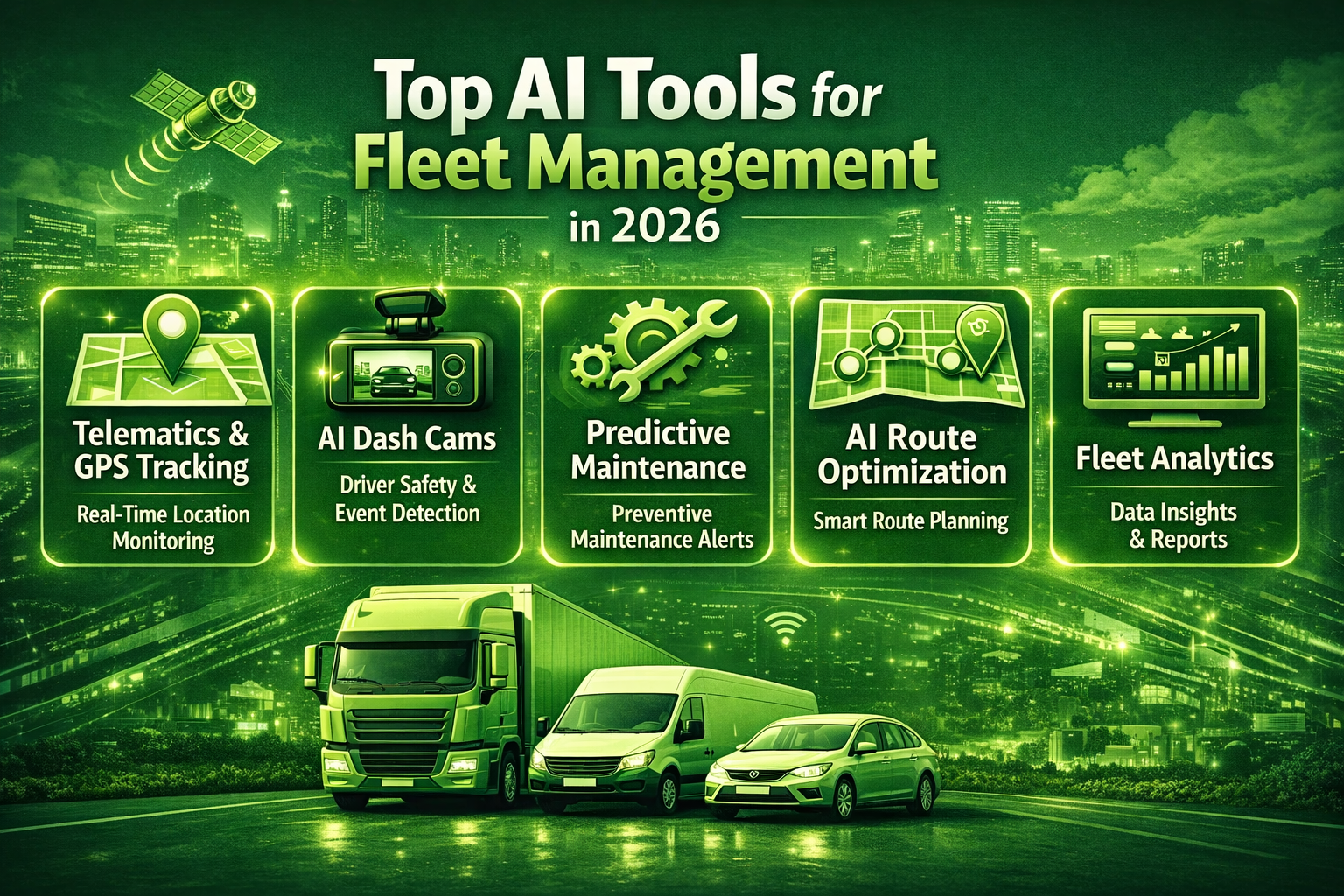
The Future of Automotive Analytics, Machine Learning Fleet Optimization & AI-Powered Operations
In an era where logistics are becoming increasingly complex and competitive, AI in fleet management isn’t just an advantage – it’s a necessity. From predictive maintenance to dynamic routing and real-time driver coaching, artificial intelligence is rewriting the rules of how fleets operate. In this blog, we’ll explore the top AI tools for fleet management in 2026, how they empower automotive analytics, and why machine learning is driving modern, efficient, and safer fleets.
Let’s dive in.
Why AI Is the Backbone of Modern Fleet Management
The days of manual logs and reactive maintenance are over. By 2026, fleets must leverage AI to manage scale, complexity, and cost pressures – especially in logistics, transport, construction, and last-mile delivery operations.
Here’s why AI has become mission-critical:
- Predictive insights – anticipate failures before they happen.
- Real-time optimization – adapt routes based on traffic, fuel, weather, and delivery windows.
- Behavior analysis – monitor driver safety and coach for better performance.
- Cost reduction – optimize fuel, maintenance budgets, and asset utilization.
- Compliance automation – reduce legal risk with digital, AI-driven reporting.
In short, AI isn’t replacing fleet managers – it’s amplifying their decision-making with analytics that humans alone couldn’t process before. The result? Lower costs, smarter operations, and safer roads.
Core AI Capabilities Transforming Fleets in 2026
Before reviewing tools, it’s important to understand what AI does in fleet management:
1. Predictive Maintenance
AI analyzes engine data, sensor streams, and past repair history to forecast failures before they happen. This means fewer breakdowns, planned repairs instead of emergencies, and fewer missed delivery windows.
2. Intelligent Route Planning
Machine learning tools calculate optimal routes by merging live traffic, historical patterns, fuel prices, weather data, and delivery priorities – minimizing time, cost, and emissions.
3. Driver Behavior Analytics
AI systems monitor braking, speeding, idling, and distraction signals to create safety scores that drive coaching and reward safer driving practices.
4. Operational Dashboards & Alerts
Real-time dashboards powered by AI give fleet managers actionable insights instantly — alerting to risks or performance gaps the moment they appear.
5. Automated Compliance & Reporting
AI eliminates paperwork by automating logs, audits, and regulatory compliance tracking – particularly important as global safety standards evolve.
These capabilities are embedded in the tools we’ll explore next.
Top AI Tools for Fleet Management in 2026
Below are leading AI-enabled fleet platforms shaping the future of automotive analytics, predictive operations, and machine-learning-powered fleet performance. Rankings are drawn from industry lists and expert evaluations.
1. Samsara – Connected Operations Cloud
Best For: Enterprise fleets needing a full AI stack
Samsara leads the AI fleet management market with a unified platform that combines GPS, ELD, dash cams, and telematics under one intelligent dashboard. Its AI modules can automatically interpret driver behavior from video, prioritize maintenance needs, and optimize routes on the fly. Its safety coaching and predictive alerts make it ideal for large fleets seeking operational excellence.
Standout Features:
- AI dash cams flag distracted driving
- Integrated predictive maintenance
- Full compliance reporting
- Enterprise-grade analytics
Why It Matters:
Samsara turns data silos into a single source of truth, reducing complexity and unlocking real-time value from every asset on the road.
2. Motive (Formerly KeepTruckin)
Best For: Mid-size operations focused on safety and spend management
Motive continues to push forward with AI for driver safety and fleet spend analytics. Its predictive tools help identify risky driving patterns — and reduce operational costs by learning from fleet behavior over time.
Key Capabilities:
- Safety event detection
- Spend and cost analytics
- Integration with telematics
Real-World Impact:
Operations see reduced insurance costs and improved on-road performance thanks to AI-driven driver coaching and alerts.
3. Geotab AI Analytics & Routing
Best For: Fleets wanting deep analytics insights
Geotab blends machine learning with powerful route optimization. Although not entirely AI-run, its AI components enhance forecasting for maintenance needs and dynamic dispatching, which improves productivity — especially for businesses with complex schedules or mixed fleets.
Core Advantages:
- Dynamic route optimization
- Predictive maintenance forecasting
- Scalable data platform
Perfect For:
Fleets that need high-precision analytics tied to telematics and hardware data.
4. Verizon Connect – Reveal Platform
Best For: Service fleets and last-mile delivery
Verizon Connect shines in advanced dispatching, routing, and safety monitoring. AI capabilities help fleets squeeze more stops per day while avoiding traffic and delays, making it ideal for delivery-heavy operations.
Highlights:
- In-cab AI coaching
- 360° camera coverage options
- Automated inspection reports
Why It’s Trending in 2026:
Enhanced video and AI means fleets can boost driver performance and compliance simultaneously.
5. Uptake – Predictive Asset Intelligence
Best For: Heavy-duty assets & predictive optimization
Uptake’s AI is specialized in predictive health analysis and risk modeling. It blends historical and real-time telemetry to pinpoint when a vehicle or part will fail — long before it happens.
Key Benefits:
- Deep predictive analytics
- Automated risk scoring
- Asset performance dashboards
Ideal Use:
Commercial carriers, heavy truck fleets, and asset-intensive operations.
6. Netradyne Driver i – Vision-Based Safety AI
Best For: Safety-first fleets
Netradyne’s system analyzes real-time video feeds using edge AI cameras. It offers in-cab alerts, driver scoring, and context-rich video snippets that help proactively address unsafe behavior.
Core Uses:
- Computer vision for driver behavior
- Automated coaching alerts
- Real-time safety analytics
Use Case:
Safety-critical industries such as hazardous transport or commercial logistics.
7. Ainfinite AI Fleet Management System
Best For: Mid-tier fleets looking for real-time optimization
Ainfinite focuses on real-time vehicle tracking, predictive maintenance, and compliance reporting – all powered by AI and telematics. It’s scalable from small fleets up to enterprise operations.
Features Include:
- AI route suggestions
- Health monitoring alerts
- Driver behavior insights
Why It Matters:
A strong balance of AI intelligence and practical fleet utilities at a competitive price point.
Emerging AI Tools to Watch in 2026
AI in fleet management isn’t static. These technologies and platforms are gaining traction as innovators in the space:
42dot
A leader in autonomous fleet analytics and mobility solutions.
Covariant.ai
Uses AI robotics platforms to automate repetitive tasks and improve logistics efficiency.
KINEXON
A real-time automation system for asset and fleet visibility.
These emerging players highlight the trend toward automation beyond traditional telematics, embedding AI deeper into logistics and robotics.
How to Choose the Best AI Fleet Management Tool
Not all AI tools are created equal. Here’s a framework that helps you pick the right solution:
1. Define Your Fleet Goals
Are you optimizing cost, safety, routing, or predictive maintenance? Tool priorities will differ.
2. Look for Machine Learning Depth
AI used for deep learning and trend forecasting is more powerful than simple rule-based automation.
3. Integration Compatibility
Ensure the software plays well with your ERP, TMS, and telematics hardware.
4. User Experience
A platform that’s easy to adopt boosts driver and operator engagement.
5. Scalability
Your AI solution must grow with your fleet — from 10 to 1,000+ vehicles.
Real-World Use Cases: AI in Action
To bring this to life, here are how AI tools deliver value on the ground:
Use Case: Predictive Maintenance Saves Costs
AI predicts engine faults by analyzing sensor data, reducing breakdowns and expensive repairs before they occur.
Use Case: Smart Routing Increases Deliveries
Real-time traffic forecasts + machine learning produce routes that increase delivery counts by 10–15% per day.
Use Case: Driver Coaching Improves Safety
AI flags risky driving habits, enabling personalized coaching and lowering insurance premiums
The Next Wave of AI-Driven Fleet Innovation
By 2026, fleet AI will continue evolving toward:
- Generative AI copilots for natural language insights.
- Carbon-aware routing and sustainability scoring.
- Smarter risk and insurance optimization driven by AI
AI isn’t just optimizing fleets – it’s redefining what logistics can achieve
Conclusion
AI tools for fleet management in 2026 are no longer futuristic add-ons — they’re core to competitive success. Whether you’re running a small regional fleet or a global logistics network, integrating AI into your fleet strategy will unlock unparalleled efficiency, safety, and profitability.
Embrace AI for predictive maintenance, automotive analytics, and machine learning fleet operations – and your business will be smarter, faster, and more resilient in an increasingly demanding transportation landscape.