The automotive retail industry is evolving rapidly as dealerships face increasing competition, changing customer expectations, and the growing demand for digital experiences. To stay competitive in this dynamic market, CEOs must adopt technologies that streamline operations, improve decision-making, and enhance customer satisfaction. One of the most important tools driving this transformation is Dealership Management System Software.
A modern Dealership Management System Software helps automotive businesses manage their entire dealership operations from a single platform. From vehicle inventory and sales management to customer relationship tracking and financial reporting, these systems bring together every critical dealership function into one integrated solution. Instead of relying on multiple disconnected tools or manual processes, dealerships can operate more efficiently with centralized data and automated workflows.
For CEOs, investing in the right dealer management software solutions is not just about technology—it is about gaining strategic control over the business. With real-time insights into sales performance, inventory turnover, and customer engagement, leadership teams can make faster and more informed decisions that directly impact profitability and growth.
Additionally, modern automotive dealership software is increasingly cloud-based, allowing dealerships to access business data anytime and anywhere. This flexibility supports multi-location dealerships, improves team collaboration, and ensures that critical operational information is always available when needed.
As the automotive industry becomes more digitally driven, choosing the right car dealership management system can determine how effectively a dealership scales its operations and serves customers. In this guide, we will explore the 10 best dealership management system software providers for CEOs, highlighting the platforms that are helping dealerships optimize operations, increase sales efficiency, and deliver better customer experiences.
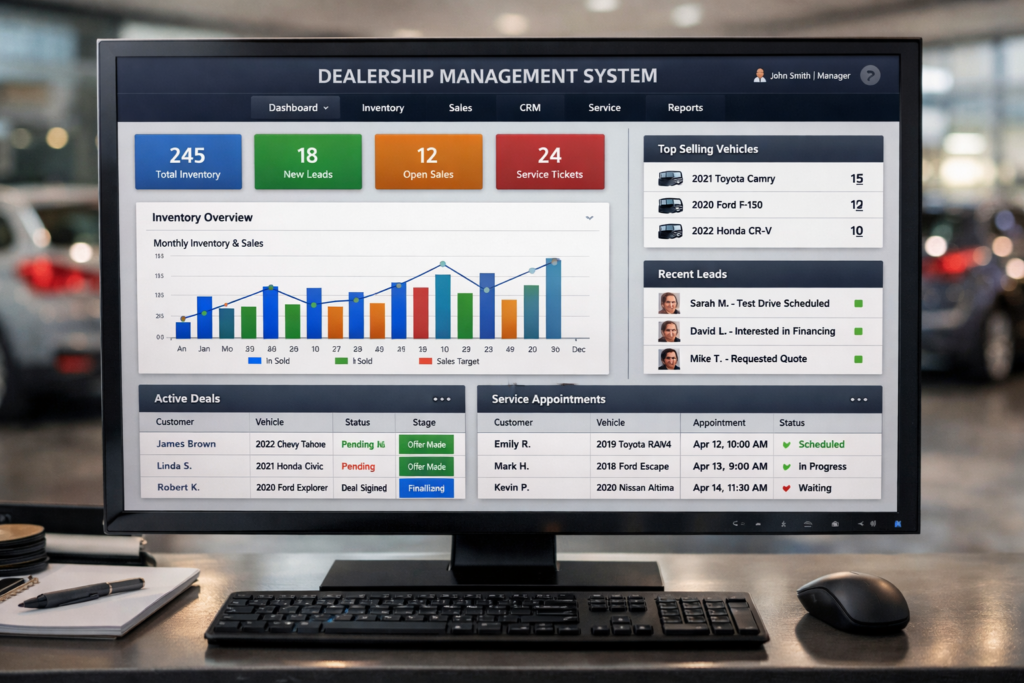
Table of Contents
ToggleWhat is a Dealership Management System (DMS)?
A Dealership Management System (DMS) is a specialized software platform designed to help automotive dealerships manage and automate their daily business operations. This system integrates multiple dealership processes – such as sales, inventory management, customer relationship management, accounting, and service operations – into one centralized platform. By using Dealership Management System Software, dealerships can streamline workflows, reduce manual tasks, and improve overall efficiency.
In the automotive industry, managing a dealership involves coordinating several departments at the same time. Sales teams handle customer inquiries and vehicle purchases, service departments manage maintenance and repairs, and finance teams oversee billing, payments, and reporting. A car dealership management system connects all these functions together, allowing information to flow seamlessly across departments.
One of the main advantages of a dealer management software solution is real-time data visibility. Dealership owners and executives can track vehicle inventory, monitor sales performance, review customer interactions, and generate financial reports instantly. This level of transparency helps CEOs and managers make informed decisions that improve profitability and operational performance.
Modern automotive dealership software also includes advanced features such as cloud-based access, automated reporting, and CRM integration. These capabilities allow dealerships to manage leads, follow up with customers, schedule service appointments, and analyze business trends from a single dashboard.
Overall, a Dealership Management System Software acts as the digital backbone of a dealership, enabling businesses to operate more efficiently, enhance customer experiences, and scale their operations in a highly competitive automotive market.
Why CEOs Should Invest in a Dealership Management System
In today’s competitive automotive market, dealerships must operate with speed, accuracy, and data-driven decision-making. For CEOs, managing multiple departments – sales, inventory, service, and finance – can be challenging without the right technology. This is where Dealership Management System Software becomes a strategic investment for modern dealership businesses.
A Dealership Management System (DMS) provides a centralized platform that connects every aspect of dealership operations. Instead of relying on manual spreadsheets or disconnected tools, CEOs can gain a unified view of the entire business. This level of operational transparency allows leadership teams to identify opportunities, optimize performance, and make faster decisions that drive growth.
One of the biggest advantages of implementing dealer management software solutions is improved efficiency. Routine tasks such as inventory tracking, invoice generation, customer follow-ups, and reporting can be automated. This reduces administrative workload and allows employees to focus on high-value activities like sales and customer service.
Another key reason CEOs invest in automotive dealership software is better data and analytics. Modern systems provide real-time dashboards and detailed performance reports. CEOs can track key metrics such as vehicle sales, inventory turnover, customer retention, and revenue trends. These insights help leadership teams develop smarter strategies and improve profitability.
Customer experience is also a major factor. A car dealership management system helps dealerships manage customer information, track communication history, and schedule service appointments efficiently. This ensures faster responses, personalized interactions, and improved customer satisfaction—leading to stronger brand loyalty and repeat business.
Additionally, many modern cloud dealership management systems offer remote access and scalability. CEOs can monitor operations across multiple dealership locations, manage teams more effectively, and expand their business without worrying about system limitations.
Ultimately, investing in Dealership Management System Software enables CEOs to streamline operations, improve visibility across departments, and create a more agile and profitable dealership business in an increasingly digital automotive industry.

Top Features to Consider in Dealership Management Software
Choosing the right Dealership Management System Software is a critical decision for CEOs and dealership owners. The right platform should not only manage daily operations but also provide data-driven insights that improve sales, inventory control, and customer experience. Modern dealer management software solutions come with advanced tools designed to streamline dealership operations and increase profitability.
Below are some of the most important features CEOs should consider when selecting a car dealership management system.
1. Inventory Management
Effective inventory management is one of the most important capabilities of automotive dealership software. A robust system allows dealerships to track vehicles, spare parts, and accessories in real time. It also helps manage stock levels, pricing, and availability to ensure dealerships always have the right products available for customers.
2. Customer Relationship Management (CRM)
A built-in CRM module helps dealerships manage leads, track customer interactions, and maintain detailed customer profiles. This feature enables sales teams to follow up with prospects, send personalized offers, and build long-term customer relationships that improve retention and sales conversions.
3. Sales and Finance Management
A comprehensive DMS should streamline the entire sales process—from generating quotes and managing deals to handling financing and insurance documentation. These tools automate billing, payment processing, and loan approvals, helping dealerships close deals faster while reducing manual errors.
4. Service and Maintenance Management
Many dealerships also operate service centers. A strong dealer management software solution should include service scheduling, repair tracking, technician assignment, and vehicle service history management. This helps improve service efficiency and enhances the overall customer experience.
5. Reporting and Business Analytics
Modern Dealership Management System Software provides real-time dashboards and performance reports that help CEOs make informed decisions. These analytics tools track sales performance, inventory turnover, service operations, and overall profitability, enabling data-driven strategies for business growth.
6. Cloud-Based Access
Cloud-based dealership systems allow users to access business data from anywhere using any device. This feature is especially valuable for CEOs managing multiple dealership locations because it enables remote monitoring, improved collaboration, and scalable business operations.
7. Security and Compliance
Since dealerships handle sensitive financial and customer data, strong security features are essential. Modern systems include data encryption, role-based access control, and compliance tools to ensure the dealership meets industry regulations and protects confidential information.
8. Multi-Location Management
For growing dealership groups, the ability to manage multiple branches from a single platform is crucial. This feature enables centralized inventory control, unified reporting, and better coordination across all dealership locations.
10 Best Dealership Management System Software Providers For CEOs
Selecting the right Dealership Management System Software helps CEOs manage dealership operations, improve sales performance, and gain real-time visibility into business data. Leading dealer management software providers offer tools for inventory management, CRM, finance operations, analytics, and service tracking that help automotive businesses operate efficiently.
Below are 10 of the best dealership management system software providers that CEOs should consider.
- AutoTech360 Dealer Management System
One of the emerging solutions for modern dealerships is the AutoTech360 Dealer Management System, designed to centralize dealership operations and streamline automotive business processes. The platform helps dealerships manage inventory, customers, and sales operations from a unified system.
https://autotech360.com/dealer-management-system-software/
Key Features
- Centralized dealership operations management
- Customer relationship management tools
- Inventory and vehicle tracking
- Integrated automotive business solutions
AutoTech360 provides end-to-end software solutions for automotive businesses, helping dealerships improve efficiency, manage leads effectively, and drive business growth.
Best For: Startups, growing dealerships, and automotive companies looking for customizable DMS solutions.
- CDK Global
CDK Global is one of the largest providers of dealership technology solutions. Its platform offers integrated tools for dealership sales, service, and financial management.
Best For: Enterprise dealership groups.
- Reynolds and Reynolds
The Reynolds and Reynolds DMS platform provides comprehensive dealership automation tools including finance, inventory, and compliance management.
Best For: Large multi-location dealerships.
- Dealertrack
Dealertrack DMS is a cloud-based dealership management solution focused on digital retailing and automotive finance.
Best For: Dealerships needing strong finance integration.
- Tekion
Tekion offers a modern cloud-native dealership platform called Automotive Retail Cloud, built with AI and open APIs.
Best For: Tech-driven dealerships.
- DealerSocket
DealerSocket provides a unified platform that combines CRM, sales automation, and dealership management tools.
Best For: Dealerships focused on sales performance.
- Dominion Dealer Solutions
Dominion Dealer Solutions offers integrated marketing, CRM, and dealership management systems designed for automotive retailers.
Best For: Dealerships seeking marketing automation and analytics.
- PBS Systems
PBS Systems provides an end-to-end dealership platform with strong accounting, parts management, and service tracking tools.
Best For: Dealerships with complex service operations.
- Auto/Mate
Auto/Mate DMS delivers cost-effective dealership management software with customizable workflows and reporting features.
Best For: Mid-size dealerships.
10. Frazer DMS
Frazer Dealer Management System is widely used by independent car dealers and small automotive businesses.
Best For: Small dealerships and used-car businesses.
Future Trends in Dealership Management Software
The automotive retail industry is rapidly evolving as dealerships adopt digital technologies to improve efficiency, customer experience, and data-driven decision-making. Modern Dealership Management System Software is no longer just an operational tool – it is becoming a strategic platform that helps dealerships adapt to changing market demands. Several emerging trends are expected to shape the future of dealer management software solutions in the coming years.
1. Cloud-Based Dealership Management Systems
One of the most significant trends is the shift toward cloud-based dealership management systems. Cloud platforms allow dealerships to access their data from anywhere, scale operations easily, and reduce IT infrastructure costs. Many dealerships worldwide are already migrating to cloud-native DMS platforms because they provide real-time updates, remote accessibility, and seamless integration with other business tools.
2. Artificial Intelligence and Predictive Analytics
Artificial intelligence is transforming how dealerships manage operations and interact with customers. AI-powered automotive dealership software can analyze historical sales data, predict inventory demand, automate customer communication, and optimize pricing strategies. Predictive analytics also helps dealerships forecast sales trends and identify high-value customers.
3. Digital Retailing and Online Car Buying
Modern customers increasingly start their car-buying journey online. Future car dealership management systems will integrate digital retailing tools that allow customers to browse inventory, apply for financing, schedule test drives, and even complete vehicle purchases online. These omnichannel platforms connect online and in-store experiences for a seamless customer journey.
4. Mobile-First Dealership Platforms
Mobile accessibility is becoming essential for dealership staff and management teams. Many modern dealer management software providers are developing mobile apps and smartphone-compatible dashboards that allow sales representatives, technicians, and managers to manage operations on the go. Mobile-first DMS platforms improve responsiveness and operational flexibility.
5. Integration with Connected Vehicles and IoT
As vehicles become more connected, dealership systems are beginning to integrate telematics and IoT data. This allows dealerships to monitor vehicle performance, track maintenance needs, and provide predictive service recommendations to customers. Such integrations improve aftersales services and help dealerships create long-term customer relationships.
6. Advanced Data Analytics and Business Intelligence
Future Dealership Management System Software will rely heavily on data analytics and business intelligence tools. CEOs and managers will be able to access real-time dashboards showing sales performance, service efficiency, inventory turnover, and customer satisfaction metrics. These insights enable better strategic planning and faster decision-making.
7. Stronger Cybersecurity and Data Protection
With the increasing amount of customer and financial data stored in dealership systems, cybersecurity is becoming a major priority. Future DMS platforms will implement advanced encryption, multi-factor authentication, and secure data management frameworks to protect sensitive information and comply with data protection regulations.
Final Thoughts
The automotive dealership industry is becoming increasingly competitive and technology-driven. To keep pace with evolving customer expectations and complex operational demands, dealerships must adopt modern digital solutions. Implementing the right Dealership Management System Software allows businesses to streamline operations, improve efficiency, and gain real-time insights into sales, inventory, and customer relationships.
For CEOs, investing in a powerful car dealership management system is not just about automation – it is about building a smarter and more scalable business. With integrated modules for inventory management, CRM, finance, and service operations, modern dealer management software solutions provide complete visibility across all dealership departments. This level of transparency enables leadership teams to make informed strategic decisions that drive long-term growth.
Additionally, the emergence of cloud technology, artificial intelligence, and advanced analytics is transforming how dealerships operate. The best automotive dealership software platforms now offer data-driven insights, predictive inventory management, and seamless digital retailing capabilities that improve both operational performance and customer experience.
As dealerships continue to evolve in a digital marketplace, choosing the right dealership management software providers will play a critical role in business success. By adopting a reliable and scalable DMS platform, CEOs can position their organizations for sustained growth, increased profitability, and stronger customer engagement in the future automotive ecosystem.